

Upright, spinet & console
Strapped to a piano board or heavy dolly and steered, never rolled across a room on its own casters.
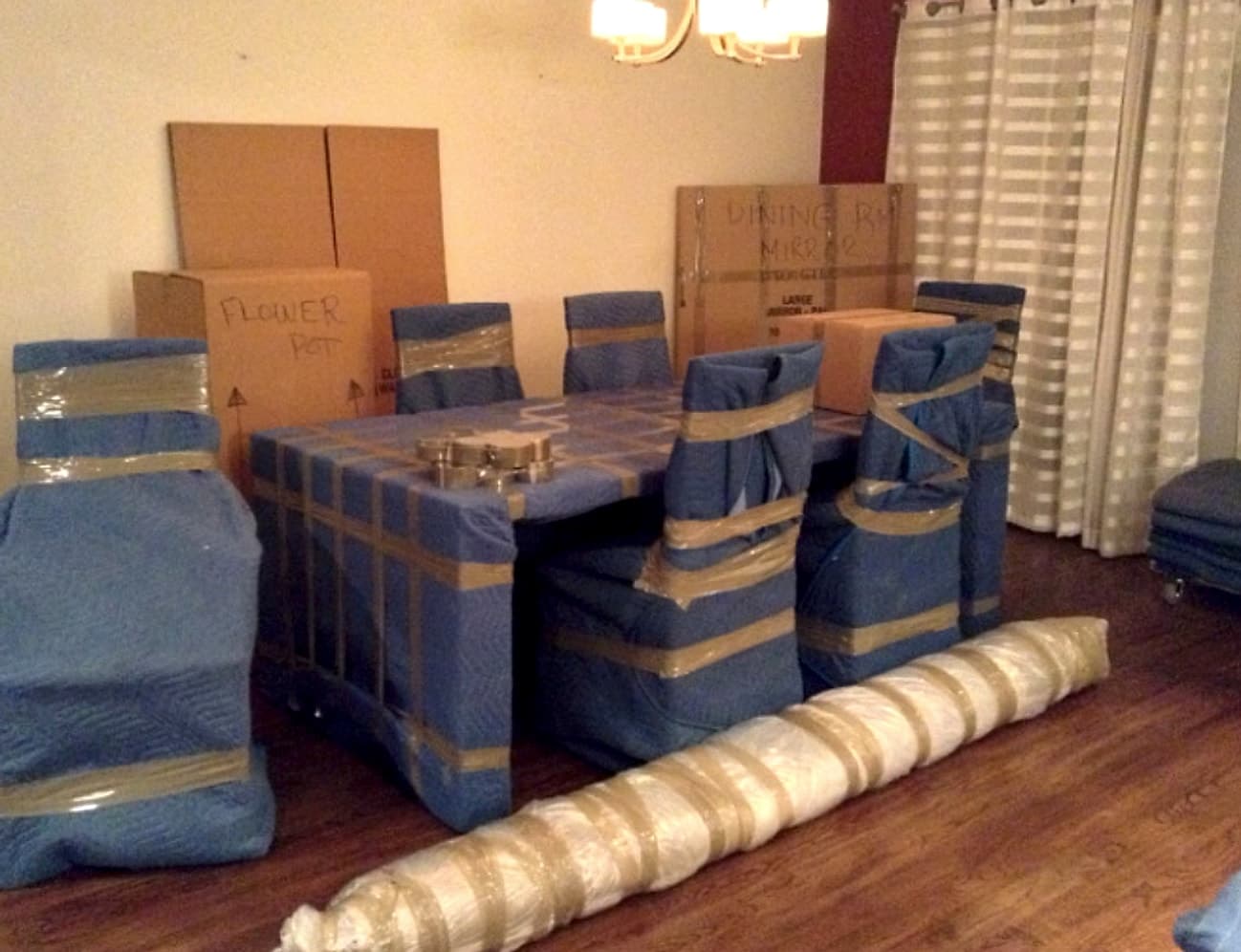
Uprights, spinets, consoles, baby grands, and full grands, moved on the right equipment by a crew that knows what a piano does when it starts to tip.
A piano is the item most likely to go wrong on moving day. It’s heavy in a way that surprises people, the weight sits high and unevenly, the casters are decorative rather than functional, and the finish marks if you look at it wrong. An upright starts around 300 pounds and a concert grand can pass 1,000.
None of that makes it exotic. It makes it a job with a correct method. Uprights get strapped upright to a piano board or heavy dolly and steered, never walked or rolled on their own casters. Grands come apart: the lid and music desk come off, the legs and pedal lyre are removed, and the body travels on its side on a padded skid, which is both safer for the instrument and the only way it fits through most doorways.
We wrap the instrument, protect the floors and doorframes it has to pass, plan the route before anything is lifted, and bring enough crew that nobody is improvising halfway down a staircase. Stairs, tight landings, and narrow hallways are normal Bay Area conditions and they’re a planning problem, not a reason to say no.
Strapped to a piano board or heavy dolly and steered, never rolled across a room on its own casters.
Lid, legs, and pedal lyre removed, body padded and moved on its side on a skid, then reassembled in place.
Lighter, but the keybed and screen still need padding and a crew that won’t flex the chassis.
Flights, landings, and narrow hallways planned in advance with the crew size to match.
Runners down, doorframes padded, and banisters protected before the piano leaves the room.
Reassembled, leveled, and set where you want it, not left in the middle of the floor.
Our piano movers service is a great fit for a wide range of moves. If you’re in any of these situations, we can help.
Clear pricing up front and a real person in your corner the whole way. No guesswork, no surprises on move day.
Share your locations, home or office size, and ideal date. It takes about a minute online, or call and we’ll take the details over the phone.
We follow up with a clear, itemized estimate so you know what to expect, with no hidden fees or surprise charges on move day.
Our crew arrives on time and equipped with blankets, dollies, ramps, and our own trucks, and treats your belongings like our own from start to finish.
We place your furniture and boxes where they belong and reassemble what we took apart, so you can get settled instead of sorting through a pile.
It depends far more on access than on the instrument. Four things move the price: the piano type, since an upright is a different job from a grand; the number of stairs at each end; doorway and turn clearances; and how far the truck can park from the door. Tell us those four and we’ll put a real number in writing before move day.
Both. Grands are dismantled for the move: the lid and music desk come off, the legs and pedal lyre are removed, and the body travels padded on its side on a skid board. That’s the standard method. It protects the instrument, and it’s usually the only way the piano clears a normal doorway. We reassemble it at the other end.
Yes, and it’s one of the most common things we’re asked. Stairs are a crew-size and technique problem rather than a barrier. What we need to know in advance is how many flights, whether there are landings or turns, how wide the staircase is, and whether there’s a banister. Those determine how many people show up.
Almost certainly, and that’s normal even when nothing has gone wrong. Tuning drifts from the vibration of transport and from the new room’s temperature and humidity rather than from mishandling. Most technicians suggest letting the piano settle in its new home for a few weeks before tuning, so it acclimates first.
That’s a normal job and doesn’t need a truck at all. Same equipment, same technique, over a shorter route. It’s worth booking rather than attempting: most piano damage happens in short indoor moves where people assume the casters will do the work.
Yes. Older and player instruments are usually heavier than they look and the cabinetry can be fragile, so they get extra padding and a slower approach. If your piano has any history of structural repair, tell us when you book so we plan around it.
Piano type and rough age, the address at both ends, stairs and flights at each, door widths and any tight turns, and how close a truck can get to the door. Photos help more than descriptions. A picture of the staircase and the doorway answers most of our questions at once.
Related guide: How much does it cost to move a piano?
Read the guideA studio, a one-bedroom, a dorm room, one room out of a house, or just a few pieces. Small moves get a real crew, real equipment, and the same care as a full-house job.
Learn moreAlready have a truck, a POD, or a container? Hire our crew by the hour to load it, unload it, or move heavy furniture around inside your home.
Learn moreWe relocate offices, retail, and commercial spaces after hours and on weekends so your team walks into a working space on the first morning back.
Learn moreBeing local means a same-day move across the valley is a short trip rather than an across-the-Bay haul. Plus long-distance moves anywhere in California and across the country.
Don’t see your city? Get a quote and chances are we cover it too.
Call now for the fastest answer, or send your details and we’ll come back with a free, written quote.